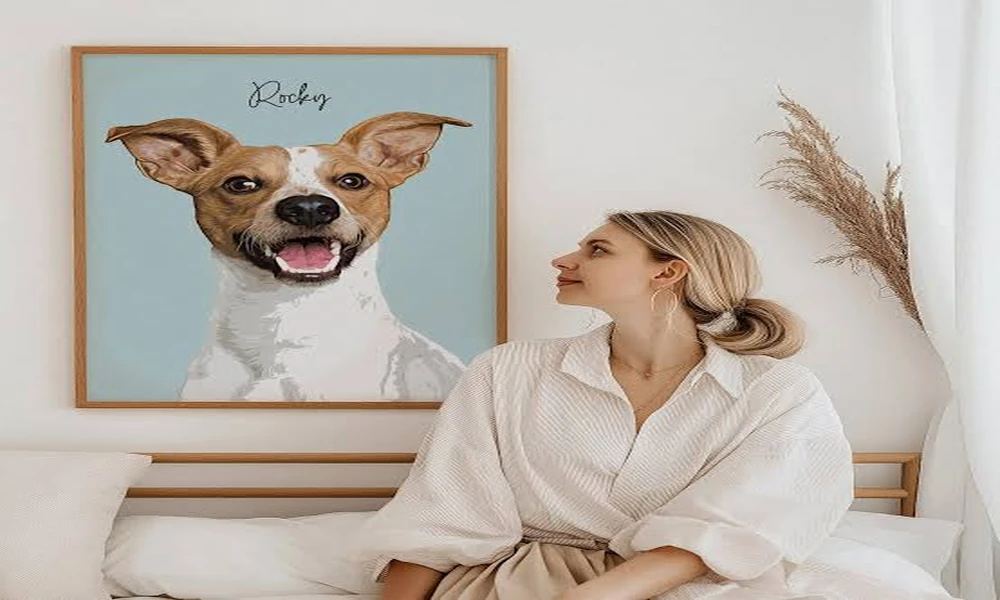
Your camera roll may contain several versions of the same animal. There is the young dog with a dark muzzle, the adult dog on a favorite walk, and the older companion resting beside your chair. When you plan a custom pet portrait, it is worth deciding which version you want to see rather than automatically reaching for the oldest sharp photograph.
A senior pet portrait can preserve the appearance you know now. It can also represent an earlier chapter if that is your preference. The important point is to choose deliberately and keep the reference images consistent with that choice. The artist should not have to guess which years belong in the picture.
Choose a time in the pet’s life before choosing a style
Ask whether the portrait is about your pet today, a remembered earlier stage, or a particular moment. These are different intentions. None requires you to explain away visible signs of age or to treat a younger appearance as a better one.
For a present-day portrait, select a photograph with the current muzzle color, coat pattern, and familiar expression. For an earlier portrait, identify the relevant photograph and its approximate period. If dates are uncertain, say so rather than attaching an invented year.
Avoid asking one face to combine incompatible stages without thinking through the result. A young reference may show shape clearly while an older one shows different coloring. If you provide both, explain what each should contribute and ask whether the request is workable in the selected design.
You can also keep several life stages in a photo album and let one portrait represent a single chapter. A standalone image does not have to summarize every year in order to matter.
Identify the details you do not want quietly changed
Look closely at the reference and name the features that make the face familiar. It may be a pale muzzle, a folded ear, the shape of the eyebrows, or a small patch beside the nose. Specific visible details help prevent a general request for “a flattering portrait” from being interpreted too broadly.
Consider whether you want those features retained as shown. If the answer is yes, state that in the brief. Do not assume every portrait maker understands that you prefer the current appearance over an idealized younger version.
Be careful with features you cannot see clearly in the image. You may remember a color differently because your other photographs were taken under different lighting. Supply a clear additional reference when possible and explain the uncertainty rather than declaring one file perfectly accurate.
These are artwork decisions, not medical interpretations. A photograph is not enough to explain why a pet’s appearance changed, and a commission does not need a diagnosis. Describe what you want depicted without making health claims about visible details.
Use existing photographs when a new session would add pressure
Begin with the images you already have. A familiar resting pose may be more suitable than a newly staged image that does not look like your pet. The goal is usable visual information, not proof that you arranged a special photography session.
If you take a new photograph, work within an ordinary comfortable moment. Keep the setting simple, photograph near eye level where practical, and stop if the animal no longer wants to participate. There is no need to reposition a resting pet repeatedly for the sake of an artwork reference.
Check whether the eyes and facial edges remain clear when you enlarge the file. Make sure a blanket, furniture edge, or another animal does not hide a feature you want depicted. A calm expression can be useful even when the pose is not perfectly symmetrical.
The reference-photo checklist for pet portraits offers a simple way to review visible detail. It does not require a dramatic pose or elaborate props. Keep the photograph selection focused on the animal you recognize.
Match the artistic treatment to the reference
Different presentations place different demands on a photograph. A close facial composition draws attention to the eyes and muzzle. A fuller view also depends on readable body shape and posture. Choose a treatment that the available references can reasonably support.
If you enjoy a fictional role or colorful background, decide which parts should remain faithful to the pet. The surrounding scene can be imaginative while the face retains its real proportions and markings. Decorative detail should not become a substitute for recognizable features.
When reviewing Pawfolio Art’s pet portrait collection of options, consider what each example emphasizes. Then check the particular product and design you intend to select. Do not assume that an example can be freely rebuilt into a different pose or composition.
It is also fine to choose a quieter image. A familiar closed-mouth expression may suit your pet more than a wide smile borrowed from a different photograph. You do not need to make the portrait appear more energetic for it to feel affectionate.
Give revision notes that distinguish identity from preference
When a proof is part of the process, check the features you named in the original brief first. Compare the main reference with the complete image, then look more closely at the face. This keeps the review connected to decisions you actually made.
Separate a likeness correction from a style preference. “Please preserve the white area around the muzzle shown in the reference” addresses appearance. “Could the background be less busy?” addresses presentation. Both may be useful, but they solve different problems.
Avoid piling on references from other periods when you are unhappy with one detail. Identify the exact file that supports the requested correction. Adding ten new images can make it harder to understand whether you still want the present-day pet.
If the first proof looks younger than intended, describe which visible features are missing. Clear notes give the portrait maker something to evaluate. A general statement that it “doesn’t have enough age” may lead to changes you did not want.
Choose a portrait you want to live with now
A portrait of a senior animal does not have to be framed as a memorial. You can commission it while the pet is beside you and enjoy it as a picture of everyday companionship. There is no need to add language about loss if that is not the purpose.
If you are giving it to someone else, ask whether they would prefer the pet’s current appearance or a particular earlier photograph. That choice belongs to the person receiving the artwork, especially when the pet’s appearance has changed substantially.
Keep the final selection simple: one chosen chapter, one main reference, and a few identifying features. Save the other photographs rather than discarding them. They may belong in a different project without all needing to appear in this one.
Custom pet portraits can reflect the animal a family knows at any stage. The familiar details are worth noticing before they are edited away. Decide which ones you want to keep, explain them plainly, and let the finished image represent that choice.