
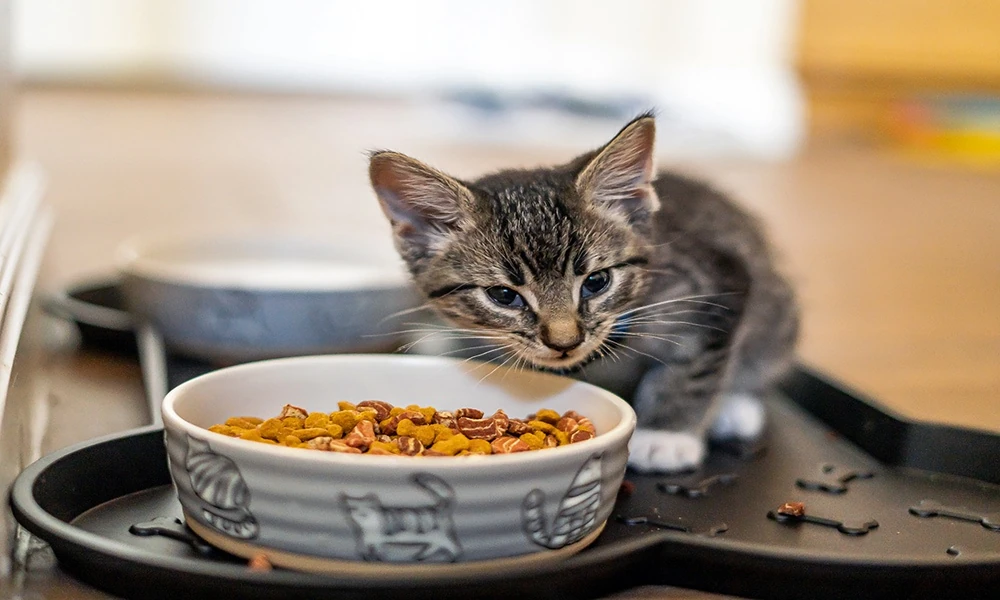
If your indoor cat is dealing with hairballs, sluggish digestion, or a stubborn few extra pounds, the fix might be sitting in the ingredients list rather than the exercise wheel. High fiber cat food helps things move along, supporting digestion, weight control, and even hairball management in cats that spend most of their day lounging rather than roaming.
Why Indoor Cats Need More Fiber Than You Think
Indoor cats burn fewer calories and groom more often than outdoor cats, which creates a specific set of digestive challenges that regular food doesn’t always address. That’s exactly the gap indoor cat food is designed to fill.
| Indoor Cat Challenge | How Fiber Helps |
| Less physical activity | Fiber adds bulk without excess calories. |
| More frequent grooming | Moves swallowed hair through the gut instead of the stomach. |
| Slower gut motility | Encourages regular, healthy bowel movements. |
| Weight gain tendency | Increases fullness without overfeeding. |
How Much Fiber Is “High Fiber,” Really?
Fiber content on a label can be confusing since there’s no single universal cutoff. However, there are general ranges worth knowing before you start comparing bags.
- Low fiber: Under 3% crude fiber; typical of standard adult formulas.
- Moderate fiber: Around 5-6% crude fiber, common in everyday indoor cat food.
- High fiber: 7-12% crude fiber; used in hairball control and weight-management formulas.
- Therapeutic/prescription fiber diets: Can run higher, but these are typically vet-prescribed for specific conditions like constipation.
Most healthy adult cats do well on the moderate-to-high range. Going much beyond that without veterinary guidance can start working against you rather than for you.
Dry Cat Foods vs. Wet: Which Delivers Fiber Better?
Both formats can supply adequate fiber, but they work a little differently in practice, and the right pick often depends on your cat’s specific issue.
| Format | Strengths | Best For |
| Dry cat foods | Higher fiber density, convenient, supports dental chewing | Hairball control, weight management |
| Wet food | Higher moisture content, supports hydration and softer stool | Cats prone to constipation or urinary issues |
A lot of owners land on a mix of both to get fiber, hydration, and palatability in one bowl.
Signs Your Cat Might Benefit From More Fiber
Not every cat needs a high-fiber diet, so it helps to know what’s actually pointing toward one:
- Frequent hairballs, especially in long-haired breeds.
- Straining in the litter box or infrequent bowel movements.
- Gradual weight gain despite normal portions.
- Loose stool that a vet has ruled out other causes for.
- A mostly sedentary, fully indoor lifestyle.
If none of these apply, a standard moderate-fiber indoor cat food is usually plenty. More fiber isn’t automatically better for a cat with no digestive complaints.
What to Look for on the Label
Fiber quality matters as much as quantity. A few ingredients consistently show up in well-formulated high fiber cat food:
- Beet pulp – A common, well-tolerated source of both soluble and insoluble fiber.
- Pumpkin – Gentle, naturally fiber-rich, and easy to digest.
- Psyllium husk – Often used in therapeutic formulas for constipation support.
- Cellulose – Adds bulk with minimal calories, common in weight-control formulas.
- Pea fiber – A plant-based option frequently used in grain-free recipes.
Avoid formulas where fiber comes from cheap fillers with no functional benefit. The ingredient matters, not just the percentage on the guaranteed analysis panel.
Switching Your Cat to a High-Fiber Diet
Sudden diet changes tend to backfire with cats, fiber-heavy diets included. A gradual transition avoids the stomach upset that comes from doing it all at once.
- Mix 25% new food with 75% current food for 2-3 days.
- Move to a 50/50 blend for another 2-3 days.
- Shift to 75% new food, 25% old, for a few more days.
- Transition fully once stool consistency looks normal throughout.
Watch stool quality closely during the switch. If it becomes noticeably looser rather than firmer, that’s usually a sign to slow the transition down.
Final Thoughts
High fiber cat food isn’t a one-size-fits-all upgrade, but for the right indoor cat i.e. one dealing with hairballs, sluggish digestion, or weight creep it can make a real difference. Pick a formula with real fiber sources like beet pulp or pumpkin, transition gradually, and loop in your vet if you’re managing a specific digestive issue rather than just general indoor-cat upkeep.
FAQs
Q. What can I give my cat to increase fiber?
Plain canned pumpkin (unsweetened, no spices) is one of the easiest additions – a teaspoon mixed into food is generally well tolerated. For a longer-term fix, switching to a fiber-formulated dry or wet food addresses it more consistently than supplementing alone.
Q. Can too much fiber be bad for a cat?
Yes. Excess fiber can interfere with nutrient absorption, cause loose stool or gas, and in some cases reduce the palatability of the diet enough that cats eat less overall. More isn’t automatically better. Match fiber levels to an actual need.
Q. What is a good high-fiber cat food for older cats?
Senior-specific formulas with moderate fiber (roughly 3-6% crude fiber) paired with easily digestible protein tend to work best, since older cats often need digestive support without added strain on aging kidneys or joints from excess bulk.
Q. What is the best high-fiber wet cat food for constipation?
Wet formulas with added psyllium or pumpkin tend to help most with constipation, since the combination of moisture and fiber softens stool more effectively than dry food alone. A vet-recommended gastrointestinal wet formula is worth considering for recurring issues.
Q. What is the best source of fiber for cats?
Beet pulp and pumpkin are generally considered the best-tolerated, most functional fiber sources for cats. Both provide a mix of soluble and insoluble fiber without the digestive harshness some cheaper fillers cause.
