
In an apartment, a small recurring sound can travel a long way. A fountain that seems unobtrusive beside a television may be distracting beside the bed at night. Choosing a quiet model helps, but water level, the surface underneath it and the outlet design also shape what you hear.
Quick answer: A pet fountain suits apartment living when its real-room sound, footprint and care routine are acceptable. Check water noise, vibration and intermittent starts separately. W03 and W03L are smaller 3L ceramic examples with different power systems; W600 Pro offers a larger 6L cordless option.
On this page
- Identify the sound
- Noise specifications
- WOPET examples
- Check your room
- Common questions
The aim is a comfortable drinking station for your pet that you can live with in a small space. Treat “silent” as a marketing word until you know how the specific setup sounds in your own room.
Find out which sound you are hearing
| Sound | Possible thing to check | First step |
|---|---|---|
| Low hum through a shelf | Vibration transmitted into furniture. | Check a stable level location and correct assembly. |
| Splashing or trickling | Outlet design and water drop. | Check the permitted fill range and intended flow setting. |
| New rattling | Loose parts, debris or pump position. | Disconnect power and inspect permitted service parts. |
| Sudden louder operation | Low water or a maintenance issue. | Check level and flow; do not keep running a dry pump. |
This is a troubleshooting starting point, not a diagnosis from sound alone. If correct filling and cleaning do not restore normal operation, use model support rather than masking the noise or opening sealed electrical parts.
Choose the position with the whole day in mind
Place the fountain where your pet can approach without crossing the busiest route through the room. Avoid balancing it on a resonant shelf or wedging it against furniture. Leave room around the station so you can spot a leak and remove the tank.
If using a protective mat, choose a stable washable surface that does not make the unit wobble or obstruct a component. Dry underneath it during checks. A mat is useful for protecting a floor; it does not fix an unseated pump or low water.
Try the intended location while the room is quiet, including the time you normally sleep. You may hear the water outlet more clearly than the motor. For a sensor model, consider whether intermittent starts are comfortable for both you and the pet.
Why a decibel claim is not the whole comparison
A useful noise comparison needs the same room, distance, water level, surface and operating mode. Different manufacturer measurements may not share those conditions. A single number cannot tell you whether the sound is a gentle stream, a buzz through a table or an occasional start-up.
For these WOPET examples, the distinction below is based on material, power and capacity. There is no measured quietest-to-loudest ranking hidden in the order.
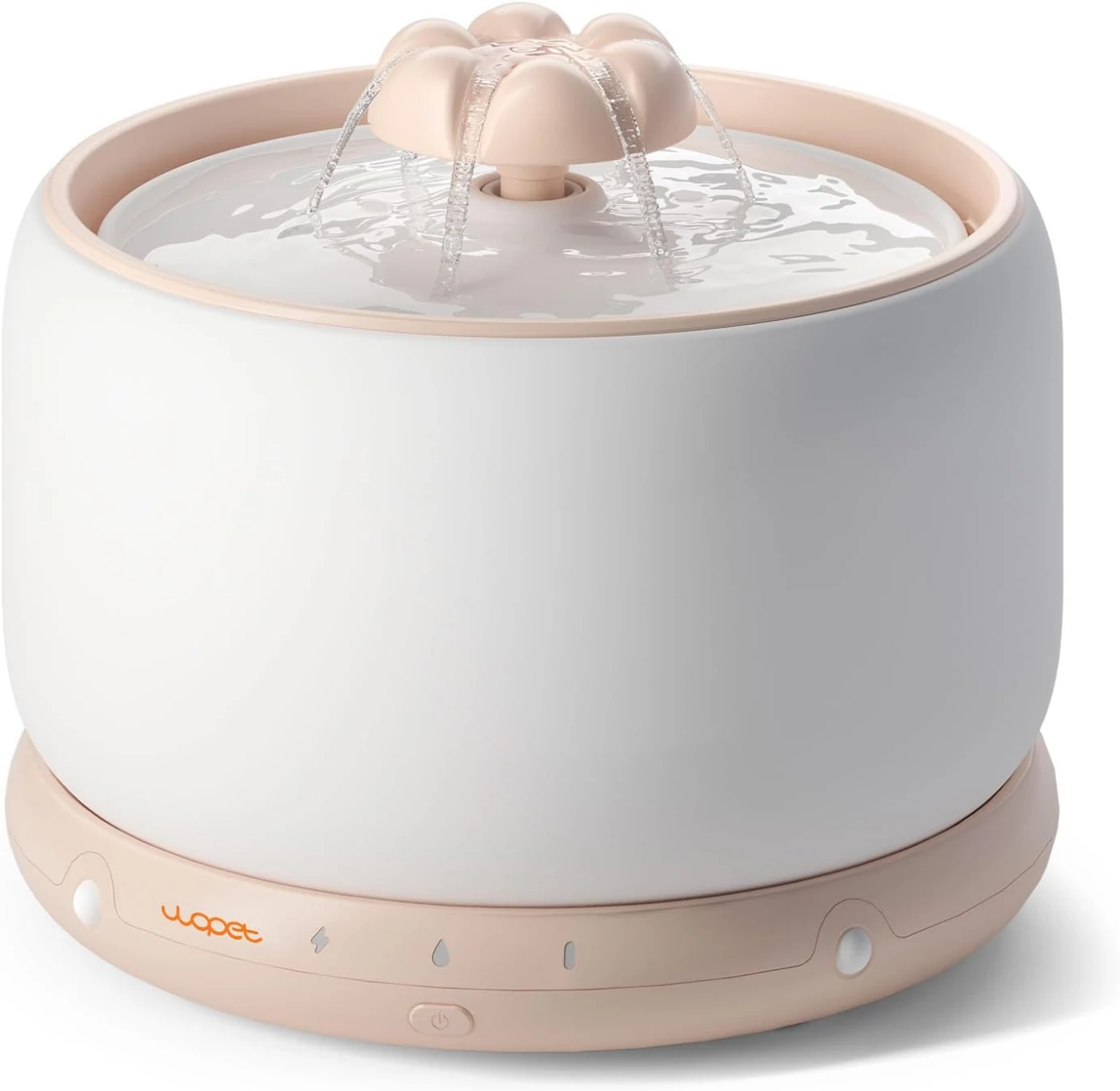
W03: cordless ceramic for a flexible location
WOPET W03 · 3L · Rechargeable / cordless
The 3L W03 wireless ceramic cat fountain can operate on its rechargeable base, so the preferred spot does not have to be beside a socket. That flexibility may help you place it away from the sleeping area while keeping it accessible to a cat or small dog. Check charge and water every day.
W03L: ceramic for a fixed outlet location
WOPET W03L · 3L · Plug-in
The 3L W03L ceramic cat fountain is wired. It is worth comparing if an appropriate outlet is already near the pet’s drinking corner and you prefer not to recharge a battery. Its similar appearance to the W03 does not mean the same power arrangement.
W600 Pro: a larger cordless station
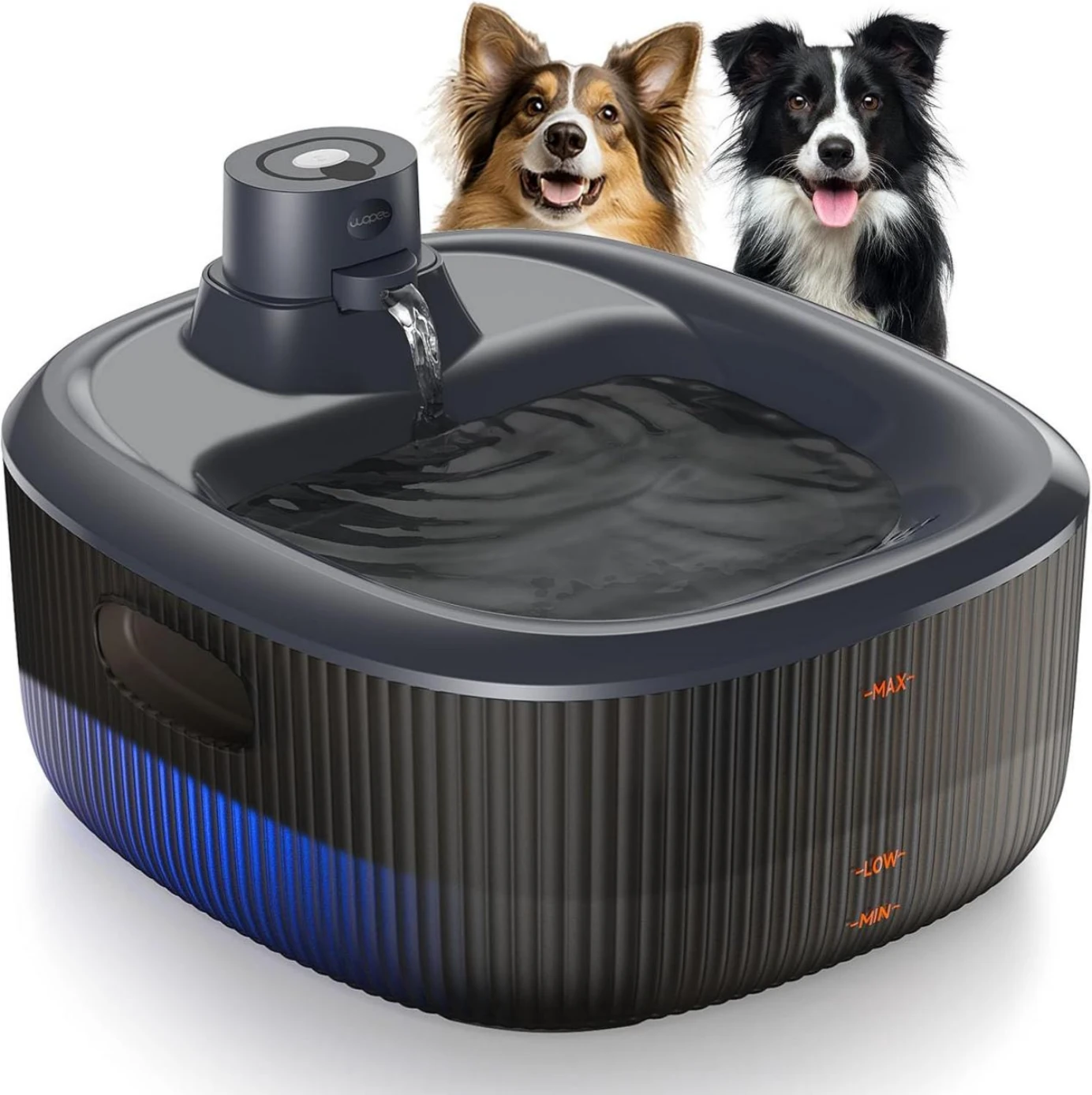
WOPET W600 Pro · 6L · Rechargeable / cordless
The rechargeable 6L W600 Pro pet fountain is the larger option for dogs or several cats. Measure the floor area before buying: a small apartment needs room for pets to turn and for you to lift the reservoir. A larger tank does not establish a quieter motor.
Keep the noise solution practical
A fountain that becomes noisy after a few weeks may need attention rather than replacement. Check normal fill range, outlet buildup, filter seating and pump care using the exact manual. Disconnect power before maintenance and keep the dry electrical parts away from washing.
Regular washing of pet water dishes remains part of care in an apartment. A convenient sink route and easy disassembly help you maintain the station without turning it into a large weekly job.
What makes it a good apartment choice?
The right pet fountain has an acceptable sound in your quiet room, a footprint your pet can use comfortably and a care routine you can sustain. If a pet prefers a still bowl or if no suitable location exists, keeping a clean bowl is a reasonable choice. A small home benefits from equipment that earns its space.
Keep the night setting practical
If you change a permitted mode for nighttime, make sure the water remains accessible in the way the pet expects. Watch normal use after the change instead of assuming a quieter human experience means the station is equally comfortable for the animal. Keep a familiar fresh-water bowl available if the pet avoids intermittent starts.
Avoid making several changes at once. A new mat, a different corner and a new mode can each alter the sound or approach. Change one factor, check stability and flow, then observe again. This gives you a useful answer without turning the apartment into a permanent experiment.
Make a quiet-room check before settling the location
Listen while the fountain is correctly filled and assembled, with appliances and entertainment sounds reduced. You are learning what the station contributes in that room, not producing a laboratory decibel result. Note whether the main sound comes from the outlet, a hum in the furniture or an occasional sensor start.
Repeat the observation at the time the room is normally quiet. A living room may become the sleeping space at night, or a bedroom door may be left open. The relevant question is whether the sound is comfortable in the way you actually use the apartment.
If you change the position, keep the pet’s access in mind. Moving a fountain behind a chair may reduce what you hear but make it hard to inspect or approach. The quietest human location is not automatically the most useful pet location.
Separate vibration from water sound
A hard shelf or hollow cabinet can transmit a motor vibration that is less noticeable on another stable surface. Check that the unit is not touching a wall or furniture edge and that removable components are seated correctly. Do not press electrical parts into place or modify the case to silence a rattle.
Water sound can change as the level changes within the permitted operating range. Follow the fill marks rather than overfilling to reduce a drop. If unusual sound begins suddenly, inspect for a low level, debris or incorrect assembly instead of assuming the model has simply become louder with age.
A protective mat may help contain small spills, but it must keep the station level and stable. Do not use a thick improvised support that blocks an opening or makes the case rock. Dry underneath the station as part of the normal check so moisture does not stay hidden against the floor.
Make cleaning fit a small apartment
Plan a wet area and a dry area before disassembling the pet fountain. A tray on a clear counter can hold small washable parts while the adapter or battery module stays well away from splashes. Keep impellers and caps out of an open drain.
For ceramic parts, allow room to lift with both hands without knocking the rim against a tap. For a larger tank, consider how you will empty it before moving it. A compact apartment makes a manageable cleaning sequence especially valuable because there may be little spare counter space.
Store the exact filters and cleaning tools together. If supplies are hidden in several cupboards, a short maintenance task becomes easier to postpone. A simple arrangement can make a practical difference without adding another device or accessory.
Choose by the layout you can maintain
| Apartment situation | Useful comparison |
|---|---|
| A quiet corner without a nearby socket | W03 for a smaller ceramic cordless station. |
| A suitable fixed outlet and no desire to recharge | W03L for a wired 3L ceramic station. |
| Dogs or several cats needing more water margin | W600 Pro if the 6L footprint and care job fit. |
| A pet that avoids motor or water sound | Keep a clean still-water option available. |
Common questions
Is a sensor fountain quieter than continuous flow?
It may spend more time without dispensing, but its starts can be more noticeable in a quiet room. The answer depends on the exact unit, setting and location. Compare the sound pattern you hear rather than assuming intermittent operation is always preferable.
Should I put a fountain beside the bed?
Only if both the pet’s access and your comfort work there. Leave room for inspection and safe movement in the dark, and consider water noise and occasional starts. A nearby alternative location may be more practical than trying to silence a poorly placed unit.
Can I compare manufacturer decibel numbers directly?
Only when the measurement conditions are comparable. Distance, room, fill level, surface and mode affect the result. Without a shared method, use the number as a limited specification rather than a reliable quietest-to-loudest ranking across brands.