Every dog owner looks. Nobody talks about it.
Which is a shame, because you are handed a detailed daily health report in a small plastic bag and most people bin it without reading. Stools are the most useful thing you can monitor at home – more informative than weight, more frequent than a vet visit, and free.
Here’s how to read one properly.
Why it beats almost anything else you can watch
A dog can’t tell you his stomach hurts. He can’t mention that he’s absorbing less protein than he was six months ago, or that something is inflamed.
What comes out the other end reflects all of it: how well the food suits him, how efficiently he’s digesting, whether there’s inflammation, whether there are parasites, and how the bacterial population in his gut is faring.
It also changes early. Digestive problems usually show up in the stool weeks before a dog looks unwell, which is exactly when you want to catch them.
What normal actually looks like
Chocolate brown. Log-shaped, holding its form. Firm enough to pick up cleanly without leaving anything behind, but not hard. Slightly moist. Same rough amount each day, one to three times daily for most adult dogs.
That’s it. If that’s what you’re getting, his digestion is working.
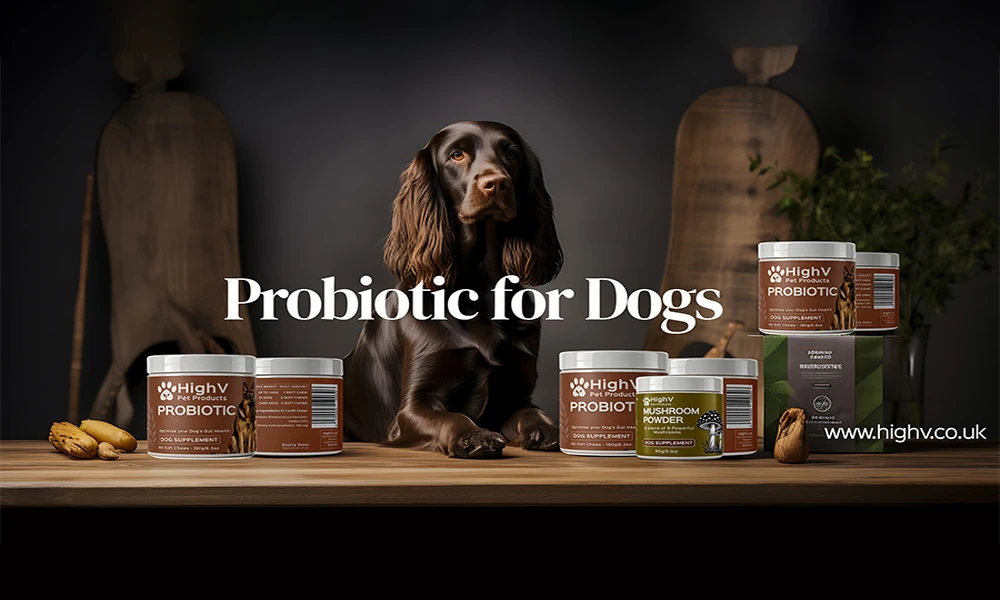
If you’re consistently getting something softer – the kind that needs two bags and still leaves a mark – that’s worth acting on rather than accepting. Persistently loose stools mean nutrients aren’t being absorbed properly, and the usual causes are overfeeding, too many extras alongside a complete diet, not enough fibre, or a gut population that hasn’t recovered from something. Daily Probiotic Chews for Dogs are a reasonable place to start alongside sorting the portions out, and a fortnight will usually tell you whether it’s helping.
Consistency: the seven-point scale
Vets use a faecal scoring chart. It’s worth knowing because it turns a vague description into something specific, and “he’s about a five” is far more useful to your vet than “a bit soft”.
1 – Hard, dry pellets. Passed with effort. Constipation, dehydration, or too much bone in a raw diet.
2 – Firm, segmented, holds shape. Leaves no residue. Ideal.
3 – Log-shaped, moist, little segmentation. Holds form, leaves a slight mark. Also ideal.
4 – Very moist, still log-shaped. Loses form when picked up. Slightly loose but not alarming.
5 – Very moist, piles rather than logs. Definitely too soft.
6 – Has texture but no shape. Diarrhoea.
7 – Watery, flat puddles, no texture. Diarrhoea, and worth acting on quickly.
You’re aiming for a 2 or a 3, consistently. A dog who sits at 4 all the time isn’t ill, but he isn’t right either.
Colour, and what changes mean
Chocolate brown is what you want.
Black and tarry, with a sticky texture, is digested blood from higher up the digestive tract. This one matters – it’s called melena and it means bleeding in the stomach or small intestine. Vet, promptly.
Fresh red streaks on the surface come from lower down, usually the colon. Common with colitis and often not serious on its own, but worth mentioning to your vet, particularly if it repeats.
Grey, pale or greasy, sometimes with a floating quality, suggests fat isn’t being digested. Points towards the pancreas or the biliary system and needs investigating.
Yellow or orange can mean food is moving through too fast for bile to do its work, and occasionally indicates a liver or gallbladder problem.
Green is usually grass. Sometimes it’s fast transit again.
White or chalky is almost always too much bone in a raw diet.
One-off colour changes after an unusual meal are rarely significant. Repeated ones are.
What’s in it
Rice grains or sesame seeds that move are tapeworm segments. Worming, and check for fleas, because fleas transmit the most common tapeworm.
Spaghetti-like strands are roundworms.
Undigested food in quantity means it’s passing through too quickly, or he’s bolting his meals. A slow feeder bowl fixes a surprising proportion of these.
Grass in small amounts is normal dog behaviour. In large amounts, repeatedly, alongside other signs, it’s worth mentioning.
Anything inorganic – plastic, fabric, string, bits of toy. Worth knowing about, because what came out safely tells you something about what he’s eating when nobody’s watching, and the next thing may not pass so easily.
The coating
A healthy stool has essentially no coating.
Mucus looks like a clear or yellowish jelly. A small amount occasionally is nothing. Regular, obvious mucus indicates irritation in the large intestine, and it’s one of the classic signs of colitis.
Blood mixed through rather than streaked on the outside is a different picture from surface streaking, and worth a vet’s opinion.
Frequency and volume
Most adult dogs go one to three times a day. Puppies go more – four or five times isn’t unusual. What matters is what’s normal for your dog and whether it changes.
A sudden increase in frequency with small amounts each time, plus straining, is the large intestinal pattern and often stress-related.
Volume tells you about digestibility. A highly digestible food produces less; a high-fibre food produces more. If you switch food and the output doubles, a lot of that bag is passing straight through, which is worth knowing when you’re comparing prices per kilo.
And on smell: all of it smells. Consistently, exceptionally foul stools alongside wind and loose consistency can indicate poor digestion or an imbalanced gut population.
Puppies and older dogs
Puppies naturally have softer stools than adults and go more often. They’re also far more vulnerable to dehydration, so the threshold for ringing the vet is much lower – diarrhoea in a puppy that lasts more than twelve hours or comes with vomiting or lethargy is a same-day call, not a wait-and-see. Parvovirus starts this way.
Older dogs often become more prone to constipation, partly from reduced activity, partly from drinking less. Straining, hard pellets and reduced frequency in a senior warrant a check rather than a wait – and in an older male dog, straining can be a prostate problem rather than a gut one.
What diet does to the picture
Worth knowing before you compare your dog with someone else’s, because the baseline shifts considerably with what they’re fed.
Kibble-fed dogs typically produce larger, softer, more frequent stools than raw-fed dogs. That’s partly moisture, partly the fibre and carbohydrate content, and it’s normal rather than a sign anything is wrong.
Raw-fed dogs usually produce smaller, firmer, drier stools that go pale and crumbly after a day or two outside. That’s the bone content. If they’re chalk-white and passed with straining, there’s too much bone; if they’re consistently loose, there’s probably too much fat or organ meat.
Wet food generally means softer and more of it, simply because of the water.
High-fibre diets produce noticeably more volume. That isn’t waste in any meaningful sense – fermentable fibre is what feeds the gut population – but it does surprise people who switch.
So compare your dog against his own baseline rather than against the neighbour’s labrador on a different diet entirely.
The other question everyone asks
Eating it. Coprophagia, if you want the proper word.
It’s common, it’s usually not a health problem, and it’s revolting. Puppies do it and mostly grow out of it. Bitches with litters do it for entirely sensible reasons. Some adults simply never stop.
The theories about nutrient deficiency are mostly not supported – most dogs who do it are perfectly well fed. More often it’s learned, or attention-seeking, or the result of having been told off for toileting indoors and deciding to remove the evidence.
What actually works is management. Pick it up immediately, every time, before he can get to it. Don’t chase him, because that turns it into a game worth repeating. Teach a solid “leave it” and pay well for it. Deterrent powders exist and results are mixed at best.
If it starts suddenly in an adult dog who never did it before, alongside a big appetite or weight loss, that’s worth a vet appointment rather than a behavioural fix – malabsorption can genuinely drive it.
Collecting a sample
If your vet asks for one, it’s more useful than most owners realise, and easy to get wrong.
Fresh is better – ideally that morning. Use a clean pot or the container the practice provides. Don’t scoop soil, gravel or grass in with it if you can avoid it.
For parasite testing, many vets want samples from three consecutive days pooled together, because worms and giardia shed intermittently and a single sample misses plenty of them.
Keep it in the fridge, sealed, in something nobody will mistake for lunch, and get it in as soon as you can.
The red flags, in one place
Ring the vet for any of these rather than waiting.
Black tarry stools. Blood in quantity. Diarrhoea lasting more than forty-eight hours in an adult, or more than twelve in a puppy. Diarrhoea plus repeated vomiting. Straining with nothing produced. Grey greasy stools. Any of it alongside lethargy, weight loss, loss of appetite, or a painful abdomen.
Make it a habit
You’re already looking. The only change is to actually register what you’re seeing.
If something’s off, note it – date, score out of seven, colour, anything unusual, and what he ate or did the day before. Three weeks of that turns a vague sense that something isn’t right into a pattern, and patterns are what get problems diagnosed.
It also stops the far more common outcome: a dog whose stools have been a four for eighteen months, because it happened so gradually that nobody noticed it was no longer a two.